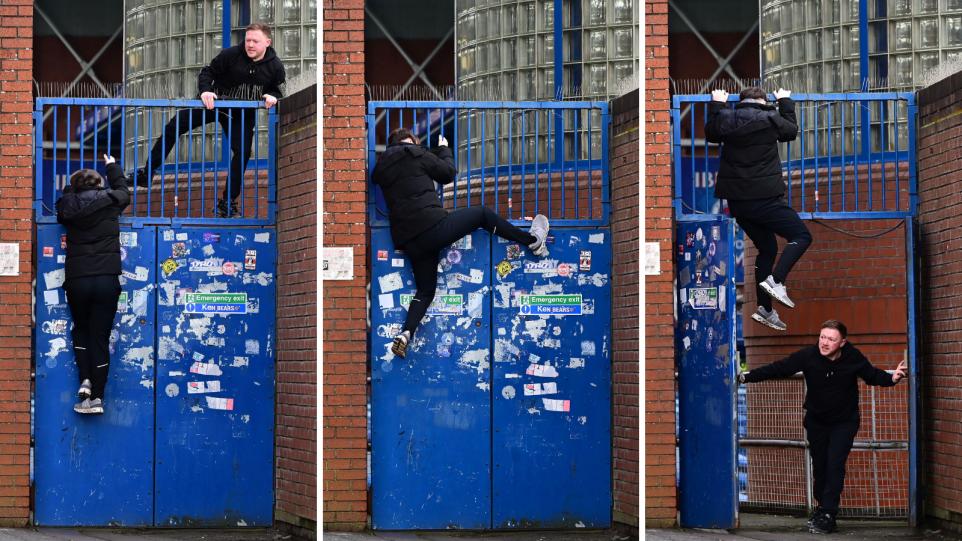
Falkirk have issued an apology to supporters after a number of Rangers fans managed to gain access to home sections at the Westfield Stadium during last month’s William Hill Premiership clash, leading to disruption inside the ground. The club has since pledged to introduce tighter security procedures ahead of their final league meeting with the Glasgow side.
Following Rangers’ 2–1 defeat at Tynecastle on Monday night a result that leaves them seven points adrift of the league leaders with only three fixtures remaining — there are doubts about whether they will fully take up their ticket allocation for the upcoming match.
Despite that, similar issues could arise again when Rangers face both Hearts and Celtic, with tensions and excitement around the title race reaching levels not seen in years.
For many clubs across the league, keeping visiting supporters particularly those from Glasgow’s biggest teams out of home sections has been a persistent challenge. Incidents often involve fans entering without valid tickets, slipping through turnstiles behind others, or forcing access via emergency exits.
As a result, clubs are now under increasing pressure to strengthen matchday security.
One Premiership club director, speaking anonymously, described the extreme tactics some supporters use to gain entry and the lengths clubs must go to in order to prevent trouble.
“We only apply our strictest controls for matches involving Rangers and Celtic,” he explained. “We set up a preliminary ticket checkpoint well away from the away end, allowing us to identify anyone without a valid ticket before they even approach the turnstiles.
“There are barriers and organised queue systems, with stewards checking tickets at every stage. Even if someone tries to rush that outer checkpoint, they still have a significant distance to cover before reaching the stand — and they’ll be stopped long before that.”
He added that attempted ticket misuse is common and often surprisingly blatant.
“You wouldn’t believe the kind of tickets people show up with. Wrong colours, wrong fixtures, completely unrelated matches. At one Celtic game, I saw photos of multiple tickets that were actually for their away fixtures at other grounds.
“This season, someone even tried to enter a Celtic match using a ticket from our game against Rangers months earlier. How that ended up in a Celtic fan’s hands is anyone’s guess.”
The director also pointed to issues with reduced away allocations, suggesting they may be contributing to the problem.
“When clubs cut the number of tickets given to visiting supporters, it can make things worse. I know the Edinburgh clubs have had real difficulties since reducing allocations at Easter Road and Tynecastle.
“You get people trying anything — dressing as TV crew, claiming to be maintenance workers — whatever they think might get them through the door.”
To combat this, some clubs have tightened ticketing policies significantly.
“We don’t sell tickets for these fixtures online,” he said. “Anyone buying must have a purchase history with us. Attending previous matches is essential — a local postcode alone isn’t enough.
“Some clubs take a different approach and knowingly place away fans together within home sections to limit disruption. But we try to avoid that entirely by being strict with sales.”
He recalled one particularly determined individual:
“Before a Celtic match, a guy stood outside our ticket office for days asking supporters to buy a ticket on his behalf. He knew we wouldn’t sell directly to him, but hoped someone else would. That’s the level of persistence we’re dealing with.”
There have even been attempts to bypass stadium perimeters entirely.
“We’ve had people go through nearby g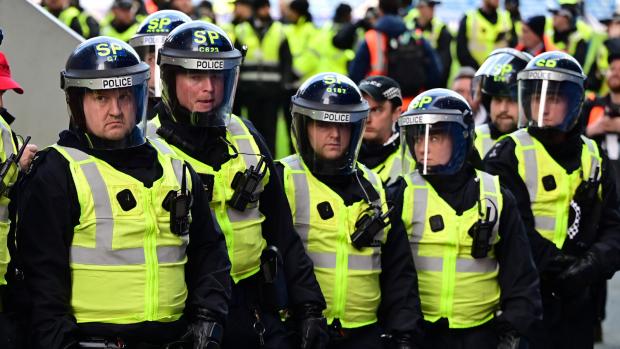
Corporate hospitality areas can also present challenges.
“You often get a mix of fans in hospitality — especially for Rangers and Celtic games,” he said. “If the away side scores, some guests celebrate in areas filled with home supporters, which can create tension.
“Businesses might host tables split evenly between both sets of fans. They don’t wear colours, but their loyalties are obvious. Generally, though, they behave — they know causing problems would affect future access.”
All of these measures come at a cost — a significant one for clubs trying to remain financially stable.
“We meet with police before the season to classify matches,” the director explained. “Lower-risk games might cost around £6,500 in policing. Mid-level fixtures can rise to £12,000 or £13,000. But for high-risk matches — like those involving Rangers or Celtic — it can hit £17,000.
“If you reach a semi-final or final at Hampden, the policing costs can approach half of the total gate revenue. That’s not something clubs control, and it’s becoming unsustainable.”
Beyond finances, there’s also concern about the image such heavy security creates.
“We want families to feel comfortable coming to games,” he said. “A massive police presence can send the wrong message and isn’t always necessary. A visible but measured approach works better as a deterrent.”
Reflecting on how things have changed over time, he added:
“There was a time when fans would switch ends at half-time, and it didn’t cause major issues. Nowadays, even a small number of extra people inside the stadium can breach safety regulations.
“Our priority is simple — ensure everyone attending has a safe and enjoyable experience.”
Meanwhile, new legislation in England and Wales — the Unauthorised Entry to Football Matches Act 2026 — now imposes strict penalties on those attempting to enter stadiums illegally, including fines of up to £1,000 and five-year banning orders.
When asked whether similar rules should be introduced in Scotland, the director was supportive.
“Anything that acts as a deterrent is worth considering,” he said. “Making it clear that this behaviour is a criminal offence would definitely help.”
Related posts:
 Write Them Off at Your Peril…” — Derek McInnes Fires Warning to Rangers Over Celtic — Message That Could Rattle Danny Rohl
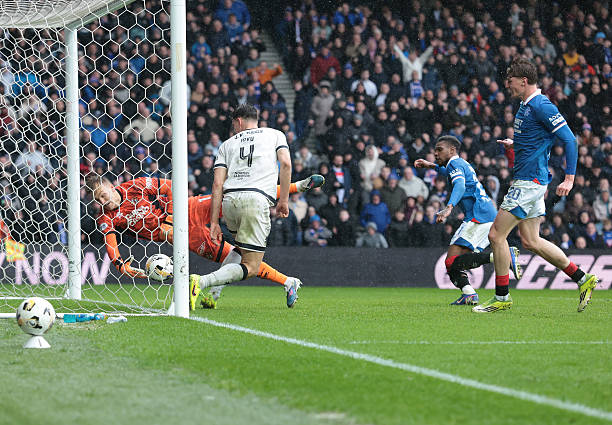 Dundee United manager names the ONE player that handed the game off to Danny Rohl’s men to go Top of the table after 4-2 defeat at Ibrox
 Captain Callum McGregor Sends a Warning to Rangers and Derek McInnes After Celtic’s Nail-Biting 2-1 Win at Dens Park
 Celtic Respond Strongly After Ally McCoist Sparks Massive SPFL Fixture Controversy and “Rigged League” Claims in Explosive Title Race Debate
