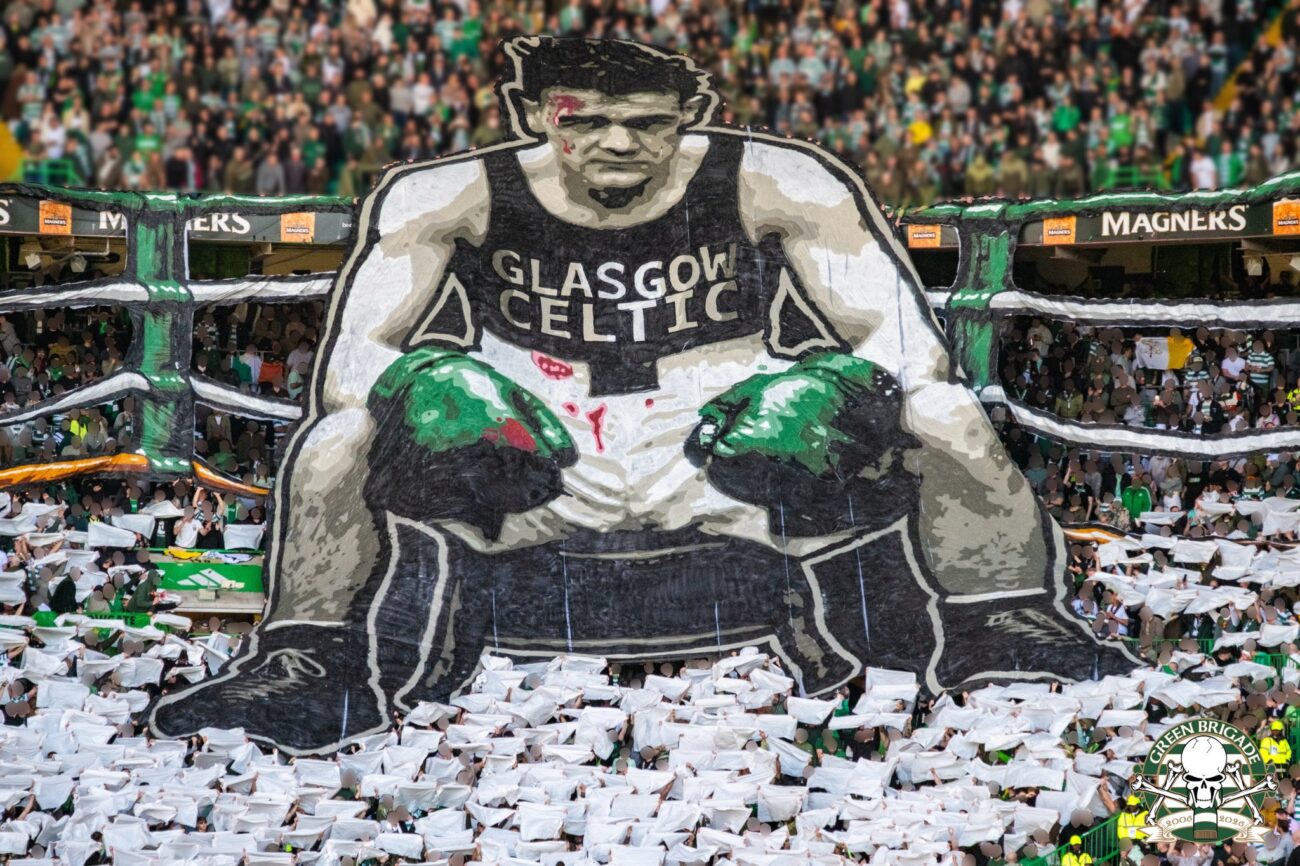
Celtic Ultras Spark Fury with Controversial Benny Lynch Derby Tifo
The final Old Firm derby of the season delivered drama both on and off the pitch as Celtic supporters unveiled a massive tifo honouring former boxing champion Benny Lynch — a figure whose legacy remains deeply controversial because of convictions involving assaults on women and children.
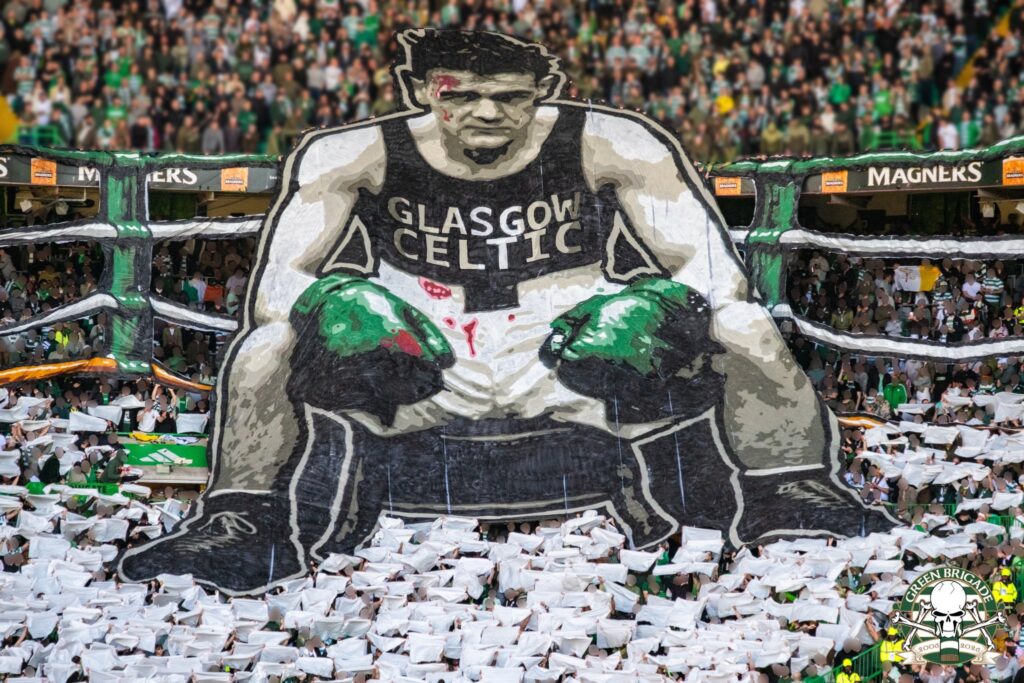
Before Celtic’s 3-1 victory over Rangers F.C. at Celtic Park, the Green Brigade displayed an enormous banner showing Lynch battered and bloodied in his corner alongside the slogan: “We’ll fight it out until the end.”
The tifo was designed to represent Celtic’s fighting spirit during the title run-in, but it quickly ignited fierce backlash online after supporters and critics highlighted the darker side of Lynch’s history.
Born in Glasgow’s Gorbals in 1913 to Irish immigrant parents, Lynch rose from extreme poverty to become Scotland’s first world boxing champion. For many Celtic fans, he represents a working-class Glasgow success story tied closely to the club’s traditional Irish-Catholic roots. Lynch famously trained at Celtic Park and fought in front of huge crowds there during the 1930s.
Inside the ring, his achievements were extraordinary. He captured Scottish, British, European, and world flyweight titles and remains regarded as one of the finest flyweights in boxing history. His rise from the tenements of the Gorbals to global stardom made him a sporting icon across Scotland.
But away from boxing, Lynch’s life spiralled into tragedy.
Alcohol addiction destroyed both his career and personal life. By the late 1930s, he had lost his titles, struggled with violence and public disorder, and faced repeated legal trouble. Historical records show Lynch was convicted in 1939 for assaults involving his estranged wife, his young sister-in-law, and police officers.
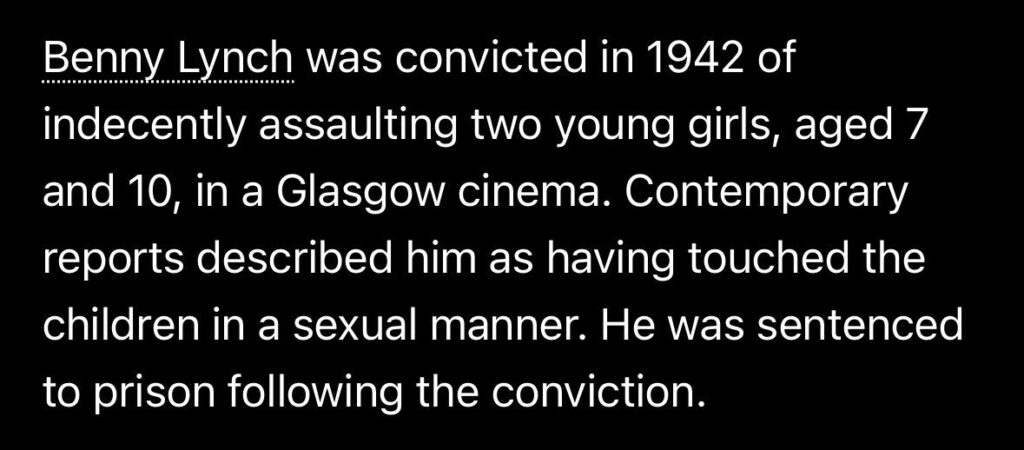
The most disturbing chapter came in 1942 when Lynch was convicted following incidents involving two young girls inside a Glasgow cinema. While details differ slightly across historical reports, the convictions themselves have long been documented in boxing archives and newspaper records.
That history is exactly why the tifo sparked outrage.
Many Rangers F.C. supporters accused the Green Brigade of glorifying a convicted offender, especially given the long-running controversy surrounding historical abuse scandals linked to the Celtic Boys Club. Critics labelled the display “tone-deaf” and questioned why such a figure was chosen for one of the biggest fixtures in world football.
Others defended the display as recognition of Lynch’s sporting greatness and his cultural significance within Glasgow’s Irish working-class history. Some supporters argued that the tifo focused purely on his achievements as a boxer rather than his personal life.
The reaction exposed once again how deeply tribal the Old Firm rivalry remains.
In Glasgow, football is rarely just about football. Every symbol, chant, banner, and historical reference becomes part of a much wider cultural battle shaped by generations of political, religious, and social tension. Tifos especially have become powerful identity statements from both sets of supporters.
For some Celtic fans, Lynch remains a tragic sporting hero whose rise from poverty inspired thousands. For others, public celebration of someone with convictions involving children crosses a line that modern football culture should no longer ignore.
The controversy also revived debate about how society remembers flawed historical figures. Sport is filled with icons whose achievements coexist alongside troubling personal histories. Supporters often separate the athlete from the person — but critics argue that public tributes inevitably celebrate both.
Despite the backlash, the display achieved what many ultras aim for: attention, emotion, and conversation. Images of the tifo spread rapidly across social media throughout the derby weekend, with fierce arguments erupting between both fanbases.
In the end, Celtic celebrated another derby win and moved closer to further domestic success. Yet the biggest talking point after the match was not only the football, but the decision to place Benny Lynch at the centre of one of the most politically and emotionally charged fixtures in world sport.
The banner may have lasted only minutes inside Celtic Park, but the debate surrounding it is unlikely to disappear anytime soon.
