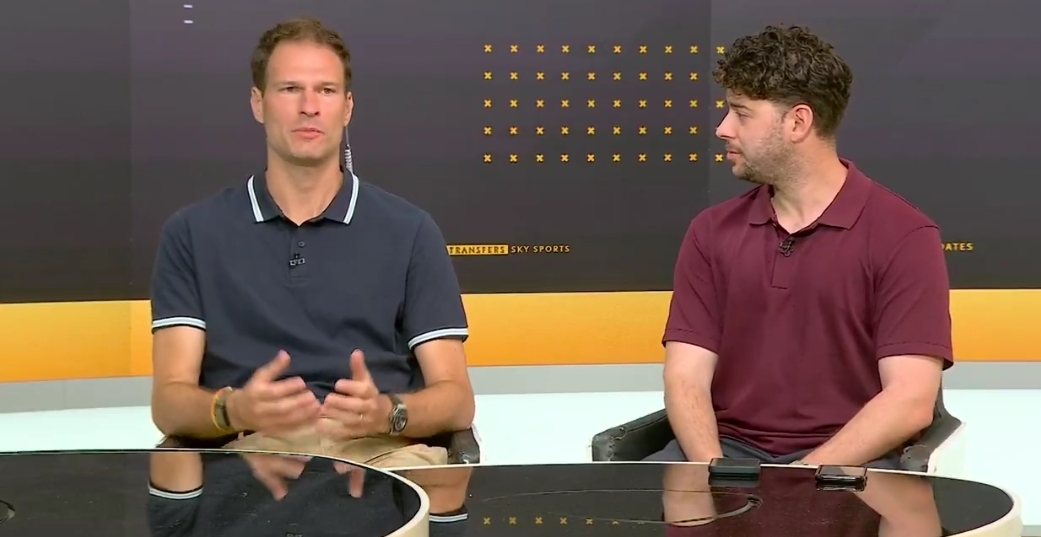
“Newcastle have overachieved and now they are paying the price for that.”
Those were the blunt words of Asmir Begović on Sky Sports as he analysed Newcastle United’s summer of significant departures. In a short but pointed segment on the transfer update show, the experienced former Premier League goalkeeper did not hold back.
He looked at the big-name exits – most notably Anthony Gordon’s move to Barcelona and Sandro Tonali’s switch to Tottenham Hotspur – and framed them as the inevitable consequence of a club that had punched above its weight for several seasons and is now confronting a harsher reality.
Begović’s assessment lands at a delicate moment for Newcastle. After a 2025/26 campaign that ended in a disappointing 12th-place finish and no European football, the Magpies have cashed in on key assets while reshaping the squad with younger, less proven talent.
The numbers are striking. Gordon’s departure to Barcelona brought in a substantial fee in the region of £69 million.
Tonali’s move to Tottenham generated even more, reported around the £90-100 million mark.
Add in Kieran Trippier’s free transfer to Wolves, along with other departures and releases, and the club has brought in well over £160 million in player sales while spending significantly less on a group of incoming youngsters that includes Bazoumana Touré, Sean Steur, Aladji Bamba, goalkeeper Ewen Jaouen and Lukas Horníček.
On the surface it looks like shrewd business – selling high and investing in potential. Yet Begović’s comment cuts deeper.
The “overachieved” label is not new in football, but applying it to a club backed by one of the world’s wealthiest ownership groups still carries weight.
Under Eddie Howe and the Saudi-led Public Investment Fund ownership, Newcastle rose rapidly from relegation battlers to Champions League participants and Carabao Cup winners.
Those years created genuine belief on Tyneside that sustained top-four or top-six status was realistic. Expectations soared. Wages rose. Ambitions followed.
When the on-pitch results dipped last season and European qualification disappeared, the financial and sporting pressures that had been managed during the good times became harder to ignore.
Begović, drawing on his own long career that included spells at Stoke (where he has previously spoken of overachievement) and other Premier League clubs, appeared to be pointing to a familiar pattern. Clubs that rise quickly often discover that the next step is the hardest.
Maintaining a high level requires continuous reinforcement of the squad, careful management of player contracts and desires, and the ability to replace departing stars without losing overall quality.
Newcastle’s recent window suggests the club is in the middle of that adjustment phase. High-profile players with proven quality and remaining value were sold. Experience left on free transfers.
In their place came younger footballers who may develop into excellent Premier League contributors but who will need time, minutes and support to reach the level of those who departed.
The timing of these moves also matters. A 12th-place finish is not a disaster for a club of Newcastle’s traditional standing, but it feels like a step backwards after the highs of recent seasons.
Fans who packed St James’ Park and celebrated European nights and a domestic trophy will naturally feel frustrated watching established performers leave.
Replies under the original Sky Sports post already showed that tension. Some supporters rejected the overachievement narrative entirely, arguing that Newcastle simply failed to maximise the squad they had and that the sales reflect underperformance rather than any inevitable correction.
Others accused media outlets of only focusing on the club when there is negativity or transfer speculation involving bigger clubs.
The emotional temperature is high, as it often is when a fanbase that has waited decades for sustained success senses momentum slipping.
From a pure footballing perspective, the strategy makes sense on paper. Selling Gordon and Tonali at high valuations generates funds that can be reinvested or used to manage Profit and Sustainability Rules (PSR) pressures that still constrain even well-backed clubs.
Bringing in younger players with resale potential is a classic long-term approach. The risk, of course, is short-term quality. Replacing the dynamism of Gordon on the left or the midfield control and experience of Tonali is not straightforward.
The new arrivals will need to adapt quickly to the physical and tactical demands of the Premier League. Eddie Howe’s ability to integrate them while maintaining competitive performances will be heavily scrutinised from the opening weeks of the new season.
There is also a broader Premier League context. The so-called “Sky Six” or traditional big clubs continue to hold structural advantages in revenue, global brand and the ability to attract the very best talent.
Newcastle’s rise challenged that hierarchy for a period. When a club outside that group reaches Champions League level and wins silverware, it raises the bar for what is expected. When results then drop and key players move on, the narrative can shift quickly from “project of ambition” to “overachievement that was always temporary.”
Begović’s comment taps into that shift. It is not necessarily a criticism of the ownership or the manager; it is an observation about the difficulty of sustaining elevated performance when the financial and competitive realities of English football reassert themselves.
Looking ahead, the coming season will reveal whether the current approach is a temporary recalibration or the start of a longer plateau. Newcastle still possess a solid core of players, a capable manager in Howe, and the financial backing to act if opportunities arise.
The new young signings may prove excellent value. The club’s recruitment team has shown in the past that it can identify talent effectively. Yet the departure of established performers inevitably creates questions about the immediate ceiling of the side. Supporters will want to see progress, intensity and results that justify the belief built during the better years.
Begović’s intervention is useful precisely because it is direct. Football analysis often softens difficult truths with caveats and positivity. By stating that Newcastle overachieved and are now paying the price, he forces a conversation about realistic expectations.
Overachievement is not an insult. Many successful clubs have periods where results exceed the underlying resources or squad depth.
The challenge is converting those periods into lasting structures – better contracts, deeper squads, clearer pathways for new players, and the ability to retain or adequately replace key individuals.
For Newcastle fans the phrase may sting. After years of genuine progress, being told the success was somehow inflated can feel dismissive of the hard work of the players, staff and supporters. Yet it also contains a practical truth. The Premier League is unforgiving. Momentum is hard to maintain. Player ambitions change.
Financial rules constrain even the richest owners. When results dip, the market reacts. High-value players become saleable assets. Free agents leave. The squad turns over. That process is currently underway on Tyneside.
Whether the price being paid ultimately strengthens or weakens the club will depend on the quality of the incoming players’ development, Howe’s ability to extract performances, and the club’s capacity to add further quality if needed. The summer of 2026 has already reshaped the squad.
Gordon is in Barcelona. Tonali is at Tottenham. Trippier has moved on. A new generation is arriving. Begović has offered his diagnosis: the club flew high relative to its longer-term baseline and is now adjusting to a more sustainable level.
In the end, the value of such comments lies less in whether every supporter agrees and more in the discussion they provoke. Newcastle’s project remains one of the most interesting in English football.
The ownership has transformed the club’s trajectory. The infrastructure and ambition are still present.
The question now is how quickly the side can stabilise after a season of relative underperformance and a window of significant player turnover. The answer will play out on the pitch in the months ahead.
For the moment, Begović’s words stand as a clear, unvarnished take on the situation. Newcastle overachieved. The bill has arrived in the form of high-profile departures. How the club responds will define the next chapter of its modern era.