
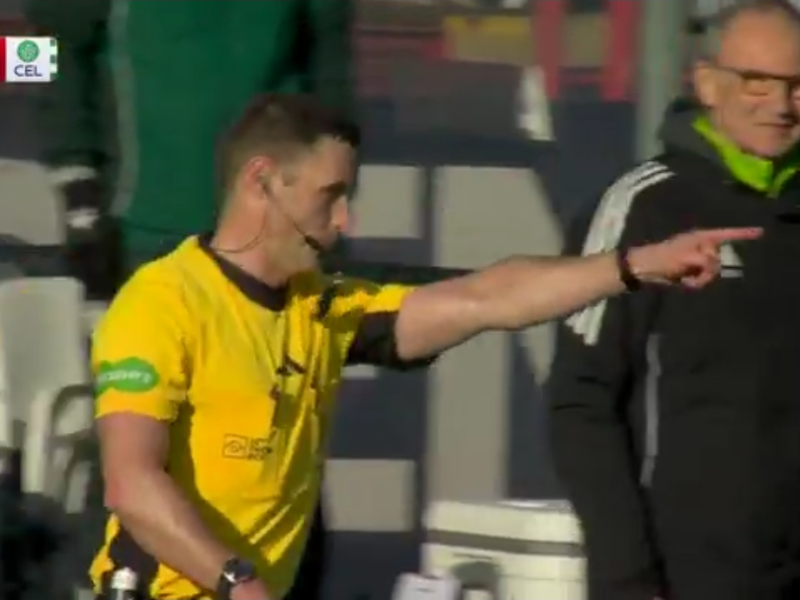
The drama surrounding Celtic right now goes far beyond what happens on the pitch.
Every match feels magnified. Every incident is picked apart.
And with the title race so tight, even the smallest decision can ignite a debate that refuses to die down.
That was exactly the case at Dens Park.
Celtic’s 2–1 victory over Dundee should have been viewed as a major moment — a gritty win that kept them firmly in the title hunt and closed the gap at the top to just three points. Instead, attention quickly drifted away from the result itself.
It all came down to one flashpoint.
One goal.
One decision that has since dominated the conversation.
Kelechi Iheanacho’s late winner looked set to be the defining headline — a crucial contribution that sealed the points. But within moments, the focus shifted. Replays surfaced. Angles were dissected. And the same question kept resurfacing:
Was there a foul in the buildup?
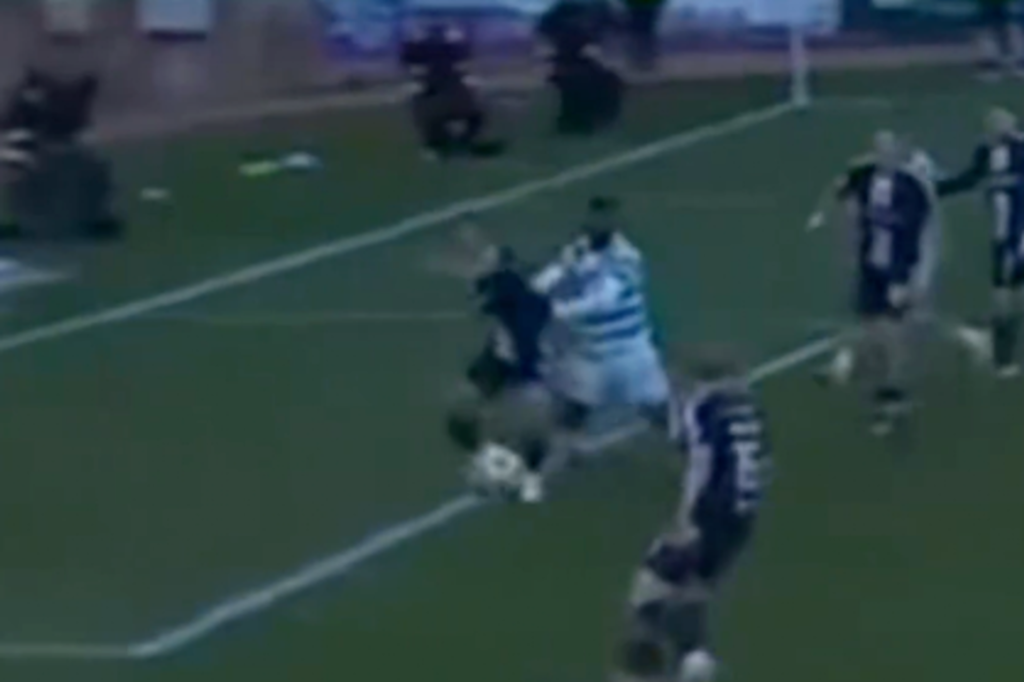
The argument was straightforward. Iheanacho appeared to make contact with Dundee defender Ryan Astley before scoring. Some claimed it was a push — enough to gain an advantage and enough, in their view, to rule the goal out.
Once that narrative gained traction, it spread rapidly.
Opposition fans were quick to point fingers. Many insisted the officials had made a clear mistake. Some argued VAR had failed in its duty. Others went further, suggesting Dundee had been unfairly denied a result.
For a brief moment, it felt like the legitimacy of the win itself was being challenged.
But then came a decisive response that shifted the tone completely.
Former referee Des Roache addressed the incident directly — and his verdict was clear.
He admitted that in a still image, the contact might not look ideal. But football, he stressed, is a physical game, and not every bit of contact amounts to a foul.
More importantly, he pointed out a key detail — none of the Dundee players appealed in the moment. There were no strong protests, no immediate reactions demanding a decision.
In situations like this, that silence can be telling.
Roache’s stance was firm: the incident simply did not meet the threshold for a foul. Not clearly. Not obviously. And certainly not enough for VAR to intervene.
He also explained that VAR is designed to correct “clear and obvious” mistakes — not to re-referee subjective decisions. This, he suggested, was very much a matter of interpretation.
Had the referee awarded a foul initially, VAR likely would have supported that call. But with the goal given, there was no compelling reason to overturn it.
In the end, it came down to judgement.
And the referee’s judgement stood.
That perspective shifts the narrative significantly.
What had been framed as a major injustice begins to look far more routine — a coming together that happens regularly in matches. The kind of moment that exists in football’s grey areas rather than as a clear-cut offence.
The outrage, however, is unlikely to fade quickly.
In a title race this tight, every decision carries extra weight. Every call is analysed. Every moment becomes part of a bigger story.
For Dundee, the frustration lingers.
For Celtic, the result remains.
Three points secured. Pressure maintained. The gap reduced.
And as the season heads toward its conclusion, the tension only continues to build.
The real question now is not just about this single incident.
It is whether, in a title race this intense, any decision — no matter how small — will ever go unquestioned again.
