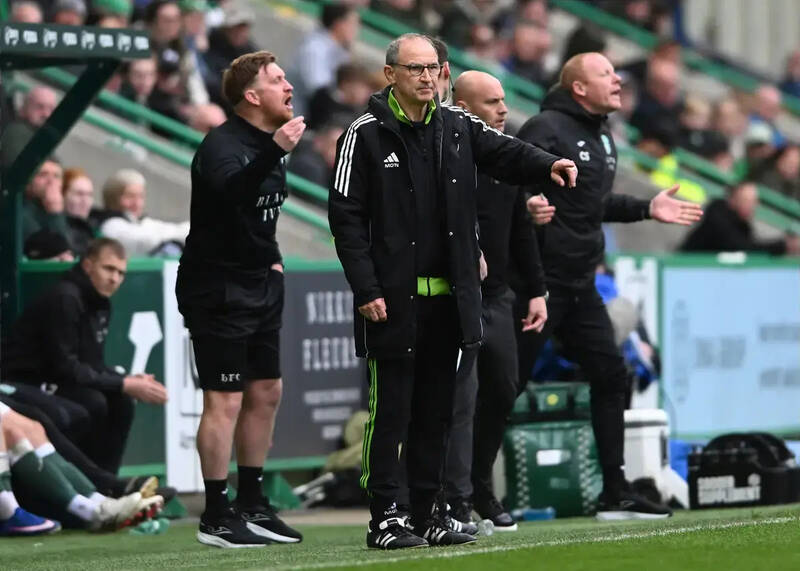
Football is emotional. Every manager loses his head occasionally. Martin O’Neill has shown passion.
Managers live every kick of the ball.
They feel the same surges of hope and despair that sweep through the stands, only they stand closer to the action, closer to the decisions, closer to the raw nerve of the game.
That intensity is part of what makes the sport magnetic. Without it, the technical area would be a quiet office, not a place of drama.
But there is a line. For me, McInnes spends far too much time walking right up to it. Sometimes it feels as though he would happily step beyond it were somebody not there to restrain him.
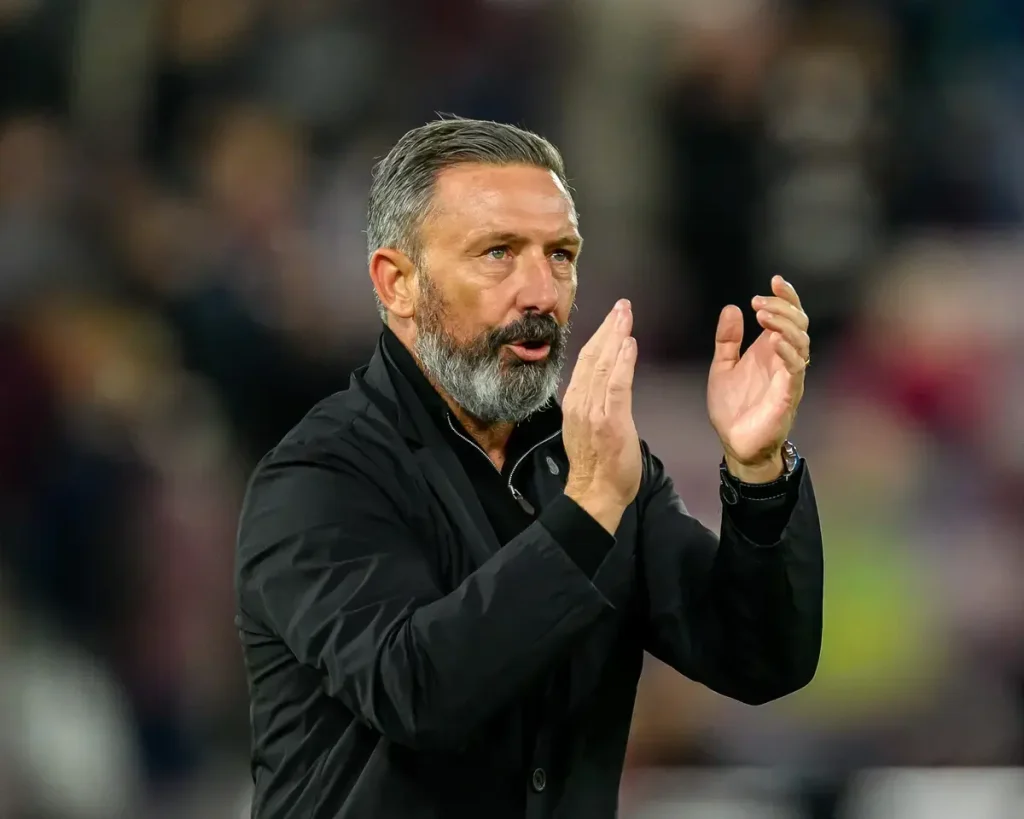
The gestures grow sharper. The voice rises higher. The body language turns theatrical. What begins as legitimate frustration quickly slides into something more consuming, something that seems to feed on itself.

This is not new. He has already found himself in trouble over his behaviour, and that alone should have encouraged some reflection about how he conducts himself in the technical area. A touchline ban is not a badge of honour.
It is a signal that the authorities, and by extension the game itself, have decided the conduct has crossed into unacceptable territory. Most managers would take that signal as a moment to pause, to recalibrate, to decide that the next time a decision goes against them they will swallow it and focus on the players still out on the pitch. McInnes appears to have chosen a different path.
Instead, I watched another afternoon when the officials almost became as important to him as the football itself. Why? Because the game apparently never unfolds precisely as Derek McInnes wants it to. The whistle is late. The free-kick is given the wrong way. The advantage is not played. Each moment becomes another spark. The hands go up. The head shakes. The fourth official is approached. The performance on the pitch becomes secondary to the performance on the touchline.
Sometimes, I get the impression that he expects every decision to fall in his favour. When it does not, the gestures begin, the complaints follow and the frustration boils over.
It is a pattern now familiar to anyone who has watched him manage for any length of time.
There is always an injustice. There is always a narrative in which his side are the ones being hard done by. Sometimes you simply have to accept the decision, swallow your disappointment and move on to the next moment. That is part of the job.
Accepting that referees are human, that they miss things, that they get things wrong, is a necessary skill. McInnes seems to treat every imperfect call as a personal affront.
All the shouting changes nothing.
Complaining does not create three points. Gesturing does not score goals. Rage does not improve a poor performance.
The referee does not suddenly reverse a decision because a manager has waved his arms more vigorously. The assistant does not rethink an offside flag because the technical area has erupted.
The only people who can alter the result are the eleven men wearing the shirt and the substitutes waiting to come on. Everything else is noise. Sometimes that noise is entertaining for the cameras. Sometimes it fills the post-match analysis. Rarely does it change the scoreline.
As I watched the opening weekend unfold, another thought crossed my mind. While the attention was focused on McInnes and his reactions, Celtic was quietly preparing. That is exactly how I like it.
I like Celtic when people stop talking about us. I like Celtic when everybody else’s headlines are filled with noise, controversy and overreaction. Because that is often when the champions do their best work. Quietly. Patiently. Relentlessly. Behind the scenes.
The training ground stays focused. The recovery sessions continue. The tactical meetings remain private. The squad works without the need to answer every question or respond to every provocation. There is a certain power in that silence.
I don’t mean the transfer situation; I mean the simple preparation for games. We remain steady and calm like the ancient forests of Scotland waiting beneath the morning mist. The trees do not announce their strength. They simply stand, roots deep, ready for whatever weather arrives. That is the image I keep returning to when I think of Celtic in these early weeks of the season. Not the loud declarations. Not the public demands. Just the quiet readiness.
People forget that silence can be a weapon. My Ginger Witch heart has always believed that.
You do not have to announce every spell before you cast it. Sometimes the most effective magic is the kind that builds unnoticed, that gathers force while others are distracted by their own noise. You do not have to match every raised voice with a louder one of your own. You do not have to turn every perceived slight into a public crusade. Sometimes you simply wait. Sometimes you allow others to exhaust themselves with shouting while you prepare something far more powerful.
That is exactly the feeling I have heading into this season.
I see Celtic waiting in the shadows.
Not hiding. Waiting. Watching. Preparing. The champions do not need to scream. They simply need to perform when it matters. They need to turn up on the days that decide titles. They need to convert the chances that separate the good teams from the great ones. They need to keep the standards high when the schedule grows heavy and the injuries mount and the fixtures come thick and fast. That is the real work. Everything else is theatre.
That is why I find all the noise from across the city so amusing.
It was only one game. One draw. One frustrated afternoon. Yet the familiar touchline drama has already returned. McInnes, losing his cool. Martin O’Neill, in spite of all the pressure, keeping his.
There is a contrast there that feels telling. One manager is already living every decision as a personal battle. The other is focusing on the longer picture, on the work that needs to be done, on the season that stretches out ahead. One is burning energy on the sidelines. The other is conserving it for the moments that will actually matter.
Meanwhile, I have faith that Celtic will keep building. I believe Martin O’Neill knows what lies ahead. I believe the players understand it too. They have been through enough seasons to recognise the difference between early noise and lasting substance. They know that titles are not won in August with gestures and complaints.
They are won in the cold months, in the tight games, in the moments when concentration and quality decide the outcome. And I certainly know what I hope lies ahead. Another title. Another reminder of who rules Scottish football.
Another season in which Celtic answers every question in the only language which truly matters. Victories.
There will be difficult afternoons. There always are. There will be decisions that go against us. There always are. There will be periods when the football is not fluent and the results are harder to come by. That is the nature of a long campaign. The teams that succeed are the ones that keep their heads when those moments arrive.
The teams that fall short are often the ones that allow frustration to become the dominant emotion, that let the noise on the touchline become a substitute for the quality on the pitch.
So let the frustration continue elsewhere. Let the touchline theatrics fill the television screens. Let every decision become another excuse for outrage. Let the post-match interviews turn into extended complaints about officials and systems and forces beyond control. That is their choice. It is not ours.
I will keep my eyes on Celtic. I will keep believing in the champions. I will keep watching the quiet work that happens away from the cameras, the recovery sessions, the tactical adjustments, the small improvements that compound over months. That is where the real story is written. Not in the raised voices on the sidelines. Not in the dramatic gestures that make for good television. In the consistent, unglamorous, relentless preparation that turns potential into points.
And somewhere deep within the Highland mist, where in my mind’s eye I always wander, I can almost hear it already. The quiet rustle before the storm. The soft movement of something powerful gathering itself. The sense that the forest is not asleep. It is simply waiting for the right moment to move.
Because Celtic is there, just beyond the shadows. Watching. Waiting. Ready to emerge. And when the moment comes, I believe the champions will do what they have done so many times before. Overcome.
They will remind everyone, including Derek McInnes, that shouting from the technical area has never been a substitute for what happens on the football pitch. The noise can fill the air for a while. It can dominate the conversation for a few days.
But eventually the only thing that remains is the result. And results, more often than not, favour the side that stayed calm, stayed focused, and stayed ready while others were busy losing their heads.
That is the Celtic way I want to see this season. Steady. Silent when silence serves. Loud only when the football itself demands it. And always, always, preparing for the next challenge while others are still arguing about the last one.
The shadows are patient. The champions are patient. And patience, in the long run, is a far more dangerous quality than rage.