On April 26, 2026, Wembley Stadium hosted an Emirates FA Cup semi-final between Chelsea and Leeds United in a high-stakes all-Premier League clash.
Chelsea, recently shaken by the sacking of head coach Liam Rosenior, produced a disciplined performance to secure a 1–0 victory. The decisive moment came in the 23rd minute when Pedro Neto delivered a precise cross for Enzo Fernández, who rose unmarked to head home the only goal of the match.
Despite Leeds pushing and showing strong attacking intent at times, Chelsea’s defensive structure held firm, sending them through to the FA Cup final against Manchester City.
Historic Occasion for Leeds Fans
For Leeds United supporters, the match carried huge emotional weight. It was the club’s first FA Cup semi-final appearance in nearly 40 years, a rare chance to dream of silverware after years of rebuilding and Premier League instability.
Thousands of fans travelled from West Yorkshire, turning Wembley into a sea of white and blue. The atmosphere was electric, with supporters treating the occasion as a once-in-a-generation experience.
Transport operator LNER had anticipated high demand and added extra services, providing over 2,000 additional seats between Leeds and London King’s Cross. Fans were also warned to expect congestion due to the London Marathon taking place the same weekend.
A Day of Hope, Noise, and Frustration
The journey south largely went smoothly for most supporters. London was flooded with Leeds fans hours before kick-off, with chants and scarves filling King’s Cross and Wembley’s surrounding areas.
Inside the stadium, Leeds fans made themselves heard despite their side struggling to convert chances on the pitch. Some statistical models even suggested Leeds edged expected goals, but they failed to find a breakthrough.
When the final whistle confirmed their exit, disappointment set in—but the real ordeal was only beginning.
Post-Match Travel Chaos at St Pancras
As tens of thousands of supporters left Wembley, London’s transport network became overwhelmed.
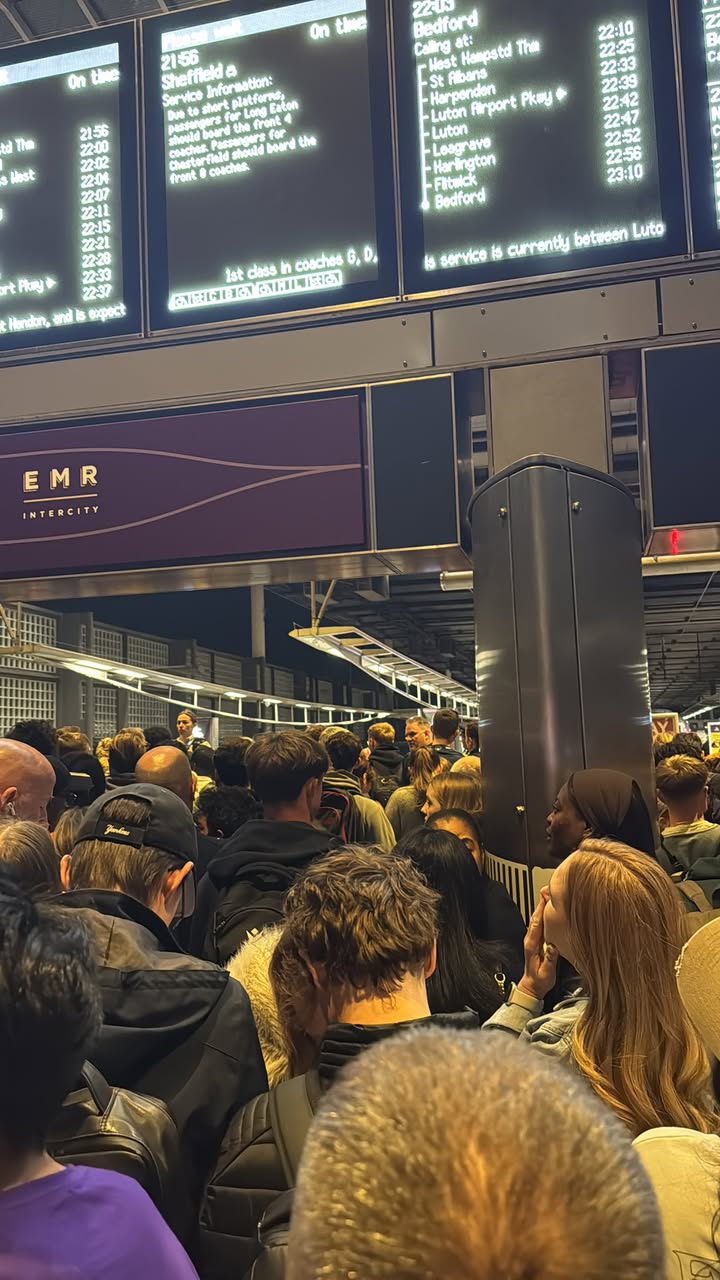
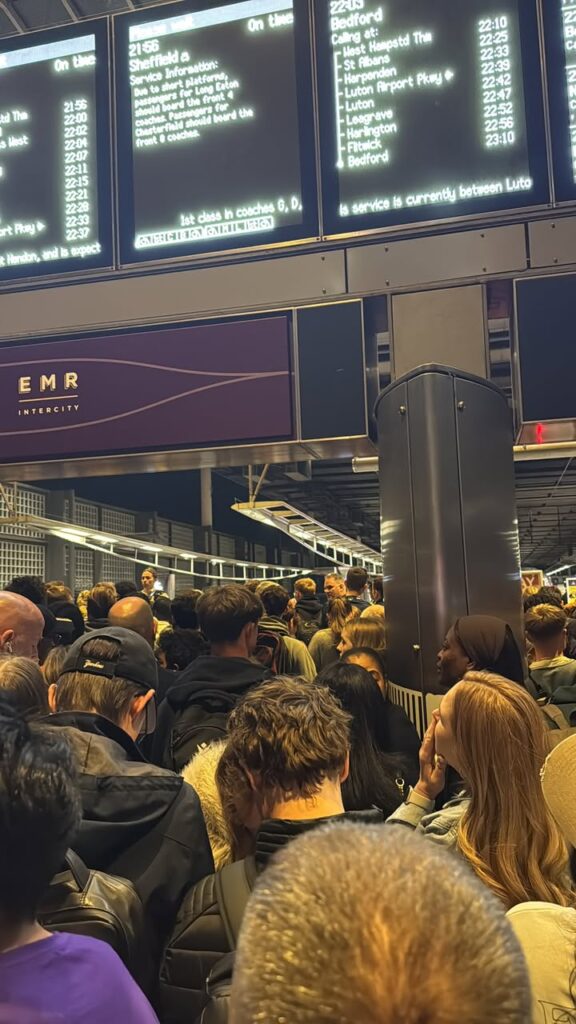
A widely shared image from the Football Away Days account showed packed scenes at St Pancras International, with departure boards displaying delays and cancellations on northern routes.
Fans reported being stranded for up to four hours with little to no clear information on services northbound. Crowds filled the station concourse, with many sitting on floors, leaning against walls, or waiting in long, unmoving queues.
Families with children, elderly supporters, and exhausted fans described growing frustration as the night wore on.
Transport System Under Pressure
The disruption was not entirely unexpected. Pre-match guidance had warned of busy services, and extra capacity had been added. However, the scale of the post-match surge—combined with the London Marathon and possible operational constraints—overwhelmed the system.
St Pancras became a major bottleneck as passengers were redirected through central hubs, compounding delays across rail services and northern connections.
Familiar Problems in English Football Travel
The incident reignited long-standing criticism about transport planning around major football events.
Despite weeks of notice, fans questioned why stronger contingency measures were not in place, such as:
- Additional late-night rail services
- Dedicated football “special” trains
- Better real-time communication
- Improved coordination between operators and event planners
For many supporters, especially those travelling long distances from the North, the return journey remains the most unreliable part of the matchday experience.
Fans Left Exhausted After Landmark Day
For Leeds supporters, the emotional toll was significant. After a rare FA Cup semi-final appearance and a narrow defeat, many still faced hours of delays before beginning a long journey home.
The combination of sporting disappointment and transport chaos left a bitter aftertaste to what should have been a memorable occasion.
While some fans reflected on pride in their team’s run, others vented frustration at rail operators and the wider planning of major sporting events in London.
Wider Lessons
The situation highlights recurring issues in managing large-scale sporting travel in England. Even with advance planning, the combination of mass departures, limited rail capacity, and multiple major events in the capital creates predictable pressure points.
Calls for improved coordination between football authorities, transport operators, and event planners continue to grow louder.
Final Word
On the pitch, Chelsea’s narrow victory booked their place in the FA Cup final. Off it, thousands of Leeds fans were left stranded in one of London’s busiest stations, turning a historic cup run into a long and exhausting journey home.
For many, the football may have ended at Wembley—but the real test began at St Pancras.
